Health first, house second, sale third
One thing before any real estate talk: significant mold in a lived-in house is a health question before it is a property question. If anyone in the house has symptoms, that conversation belongs to a doctor and a remediation professional before it belongs to any buyer — including us.
What mold does to a listingThe inspection finding that empties the room
Few words on an inspection report scatter financed buyers faster. Even properly remediated mold invites re-testing, re-negotiation, and lender scrutiny; active mold usually ends the deal outright. Listing a moldy house without addressing it is mostly a way to collect dead contracts.
What remediation really involvesFixing the water first, always
Legitimate remediation finds and fixes the moisture source, removes what is contaminated, and verifies the result — and it is priced accordingly. Spraying and painting over it is cheaper and shows up later, in the worst possible room: due diligence. If you remediate, do it properly and keep every document.
What selling as-is looks likeThe house can be someone else’s project
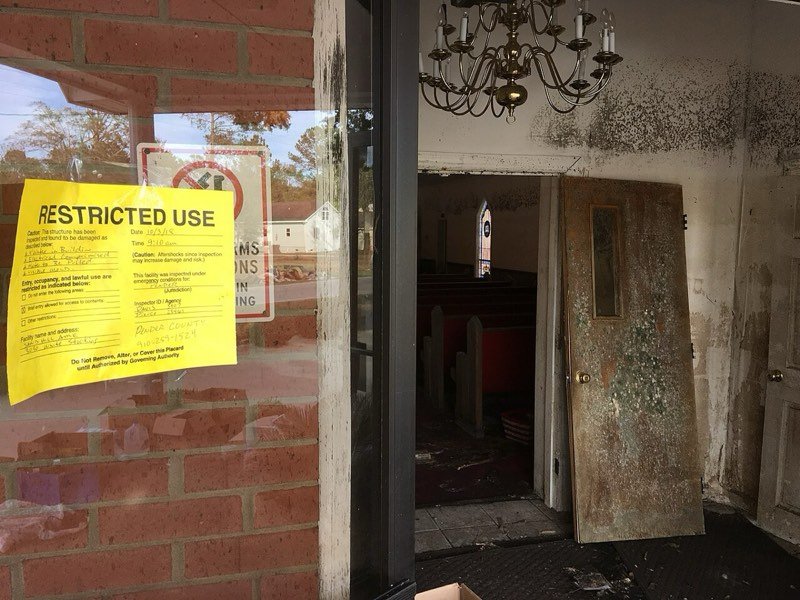
We buy mold houses knowing what they are — that is the business. Rochelle lived with Florence damage that grew into unsafe mold; we bought the home as it stood, gave her 30 days after closing to move out on her schedule, and ran the remediation ourselves after handover. Her story is here.
Living with it right now?
Start wherever helps most: the repair-or-sell framework, how an as-is sale works, or a straight conversation at (910) 372-6720.
What remediation should look likeHow to spot a real remediator
Legitimate mold remediation follows a known playbook — the EPA publishes it. Source control first: no remediation survives an unfixed leak. Containment and negative air during removal. Removal of porous materials that cannot be cleaned — drywall, insulation, carpet — rather than spraying them. And verification at the end, ideally by a party who is not the one who did the work. A contractor who skips straight to “we fog it and paint with sealer” is selling you a future disclosure problem, not a fix.
Cost scales with spread: a contained bathroom problem and a whole-crawlspace colonization are different projects by an order of magnitude. This is why the timing section of this guide matters more than any other — mold is the one problem on this site with a growth rate.
Health comes first, full stopWhen the house question waits
The EPA and CDC are plain about who mold hits hardest: people with asthma, allergies, compromised immune systems, young children, and older adults. If anyone in the household is symptomatic — persistent respiratory irritation, headaches that ease away from home — the medical conversation precedes the real-estate one, and temporary relocation is a health decision, not a defeat. Rochelle lived in her house years longer than she should have because the sale felt impossible. It was not, and the healthiest thing she sold was the timeline.
Cover image — Photo: Zach Rudisin, CC BY-SA 4.0, via Wikimedia Commons.