Three claim situations, three different sales
This guide is orientation, not legal advice — insurance contracts differ, and the closing attorney should see your specific claim paperwork before you sign anything. That said, here is the shape of it.
Claim paidThe money and the repairs need to match the story
If you took a payout and did the repairs, keep every receipt — buyers and their inspectors will want the trail. If you took a payout and did not repair, that gap usually surfaces in the sale, and on financed deals it can become the lender’s problem too. An as-is cash sale prices the house as it actually stands, receipts or not.
Claim openA sale and a claim can run in parallel
An open claim does not automatically block a sale, but who ultimately receives the claim money — you, the buyer, or the lender being paid off — depends on your policy, the timing, and how the contract is written. This is the single best moment in the whole process to spend an hour with a closing attorney. We close around open claims; we just do it with the paperwork in the open.
Claim deniedA denial is not the end of the sale
Denied claims leave owners carrying damage with no check coming. You can dispute the denial — on a clock, per your policy — or stop funding the fight and sell the house as it stands. We buy storm-damaged houses with denied claims attached; the denial changes your net, not your options.
Claim paperwork in one hand, house in the other?
Bring both to one call: (910) 372-6720. Related reading: the repair-or-sell decision and what mold does to a sale.
Know your policy’s clocksDeadlines hide in the paperwork
Insurance policies carry time limits most owners never read: prompt notice of loss, deadlines for proof-of-loss submissions, and contractual limits on how long you have to sue over a denial. North Carolina’s Department of Insurance publishes consumer guidance, and a public adjuster or attorney can read your specific policy in an hour. The point for a seller: a claim you are “getting around to” is a claim losing value. Whether you keep the house or sell it, work the claim on its own clock.
Document like a professional: dated photos, receipts for emergency repairs, a log of every adjuster contact. If the house sells mid-claim, that claim file is what makes the closing attorney’s job — and your payout — clean.
Who gets the moneyThe three-way question at closing
Claim proceeds generally follow the loss, not the address: money for damage that happened while you owned the house is typically yours, but an outstanding mortgage complicates it — lenders are named on policies and often must endorse checks — and a sale contract can allocate claims explicitly. The clean pattern in practice: the payoff gets satisfied, the contract states who keeps pending proceeds, and nobody relies on a verbal understanding. Insist on that clarity; it is a paragraph, not a battle.
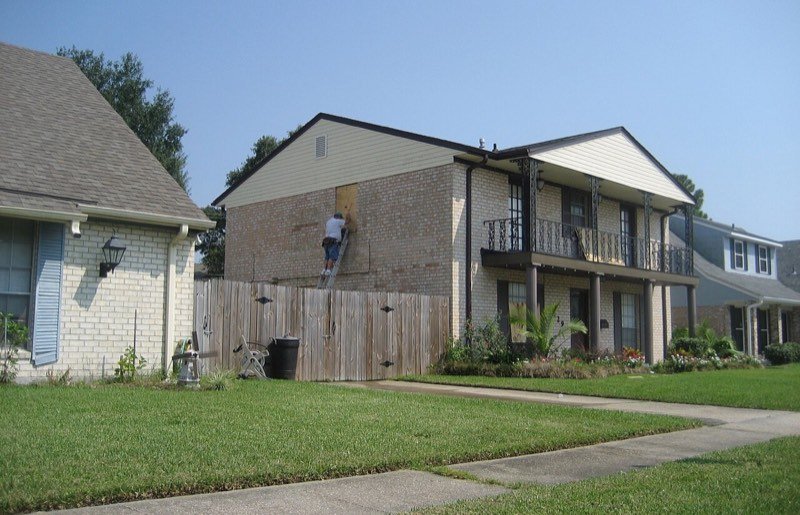
Cover image — Photo: Infrogmation of New Orleans, CC BY-SA 3.0, via Wikimedia Commons.